
Dental implants are a commonly sought teeth replacement solution in Singapore. They can restore your smile’s function and appearance, whether your tooth loss is due to ageing, injury, or decay.
Let’s explore what dental implants are, their benefits, types, the procedures involved, and more to help you make an informed decision.
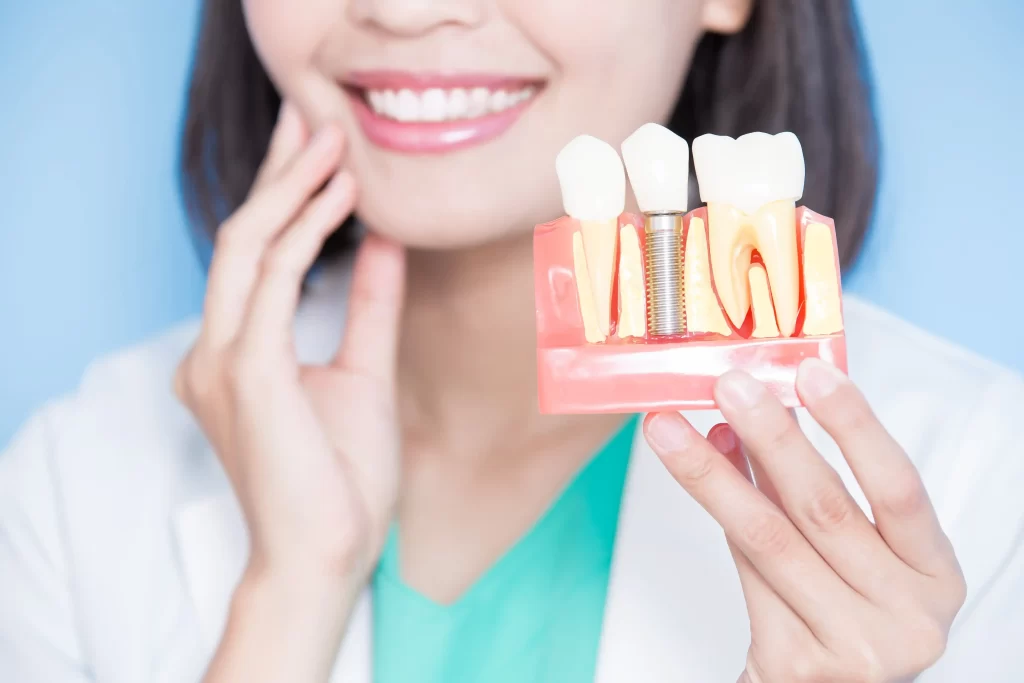
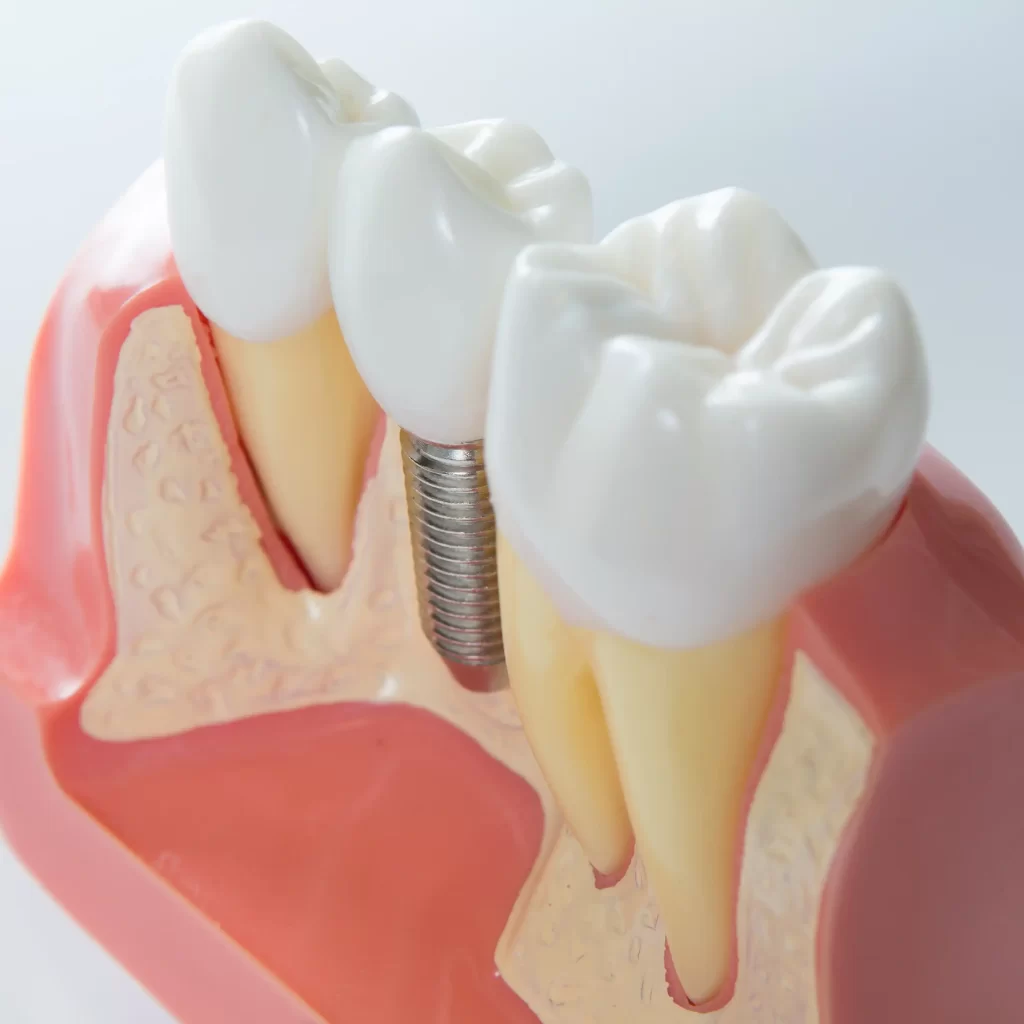
A dental implant is a titanium post that is surgically embedded into the jawbone to act as a tooth root. It provides a firm foundation for placing a replacement tooth, such as a crown, bridge, or complete dentures.
Over time, osseointegration occurs, which is when the implant fuses with the jawbone, ensuring it remains firmly in place. This makes dental implants a durable and reliable solution for tooth loss.
Your oral surgeon will help determine which type is best for your needs.
Before the procedure, your oral surgeon will do a detailed evaluation, which may include imaging tests, to assess your jawbone and surrounding tissues. You’ll also discuss your medical history to ensure you’re a suitable candidate. Depending on your jawbone, you may need bone grafting or a sinus lift to amass enough bone for the implant to anchor securely.
Your gums may be swollen or tender post-surgery, and you may experience minor bleeding. Pain relief medication is typically prescribed to manage any discomfort. Your oral surgeon will give detailed aftercare instructions to ensure optimal healing.
The length of dental implant surgery varies depending on several factors, including the number of implants being placed and whether additional procedures like bone grafting are necessary.
The surgery will take about 1 to 2 hours per implant. However, the entire process, including healing, can take several months. Osseointegration (the fusion of the implant with the bone) alone can take 3 to 6 months.
Proper aftercare is essential to ensuring the success of your dental implant. Some essential aftercare guidelines include:
Dental implants don’t require any significant lifestyle changes, but there are some things to consider:
One dental implant can cost around $3,000 to $5,000 but the final cost of dental implants will depend on the type of implant being used. Endosteal implants, which are the most commonly used and are inserted directly into the jawbone. They tend to be more affordable compared to subperiosteal implants.
Subperiosteal implants, which sit on or above the jawbone, are generally more expensive as they are typically reserved for patients with insufficient bone density who cannot undergo bone grafting.
Another factor that can drive up the cost is the need for additional procedures. If the patient does not have enough healthy bone to support the implant, they may require bone grafting or a sinus lift. These procedures add complexity and time to the treatment plan, resulting in higher costs.
With consistent care, dental implants can usually last 25 years or more. Their longevity depends on factors such as your oral hygiene routine, diet, and whether or not you smoke. Regular appointments with your oral surgeon are also important for ensuring the implant’s long-term success.
Dental implants offer a practical, long-lasting solution for tooth loss. If you’re considering the surgery, consult an oral surgeon to determine if it’s the best course of action for your needs.
Our doctors at Specialist Oral Surgeons have years of experience in handling the complexities of dental implant placement and are well-equipped to handle your queries ad1nd any special concerns you have.
To know more about dental implant surgery in Singapore, book a consultation with us today.
Dr Lim is specially trained in advanced surgical dental implantology in Sweden. He is one of very few Singapore Oral & maxillofacial Surgeons to be given the opportunity to spend a year in Sweden to learn the finer surgical aspects of dental implant surgery. He was attached to three different Swedish hospitals to learn the intricacies of dental implant surgery from the Swedish pioneers of dental implants.
The hospitals Dr Lim spent time in were international training centres for the world’s most established and prestigious implant company, www.nobelbiocare.com. Dr Lim Kheng Ann was one of NobelBiocare’s team key opinion leaders and professional speakers. He has spoken for NobelBiocare in conferences in Singapore, Malaysia, Indonesia, Hong Kong and China. Dr Lim was also a professional speaker for AstraTech dental implant system and conducts regular courses for local dental surgeons.
Most patients have only mild discomfort during surgery thanks to anaesthesia. After the surgery, some swelling and soreness are expected, but these can typically be managed with over-the-counter pain medications.
Initial recovery usually takes about 1-2 weeks, but complete healing, including osseointegration, can take several months. During this time, your oral surgeon will track your progress to ensure the implant is integrating properly with the bone.
The actual placement of the implant takes about 1-2 hours per implant. However, the overall process, including healing, can span several months.
For most patients, dental implants are worth the investment. They provide a long-lasting, natural-looking solution for tooth loss and improve your smile’s function and appearance.
Good candidates for dental implants are those with healthy gums and sufficient jaw bone density. Individuals with uncontrolled health conditions, heavy smokers, or those who have done radiation therapy to the head or neck may need additional evaluation.
Bone grafting may be needed if you do not have enough healthy bone to support the implant. Your oral surgeon will determine if a graft is required, as they assess your jaw bone condition.
After the dental implant surgery, you may feel some pain, swelling, and bruising for a few days. These symptoms are usually manageable with pain relief medication prescribed by your oral surgeon.
In the initial healing period, you must stick to soft foods like soups, smoothies, and yoghurt to avoid placing pressure on the implant site. As you heal, you can gradually reintroduce harder foods into your diet.